Last Update: May 9, 2025
Owning an RV gives you a home on wheels, but just like your regular house, you need to take care of it. I’ve worked with RVs for over 15 years, and I’m going to share what really works to keep your rig in great shape for all your adventures.
When to DIY vs When to Call the Pros
You can handle a lot of RV maintenance yourself, but some jobs need a professional:
- DIY stuff: Regular checks, cleaning, topping up fluids, fixing minor issues
- Pro jobs: Engine problems, electrical work, HVAC repairs, structural damage, slide-out mechanisms
While fixing things yourself saves money and feels rewarding, sometimes you need professional RV help to make sure everything’s done right and safely.
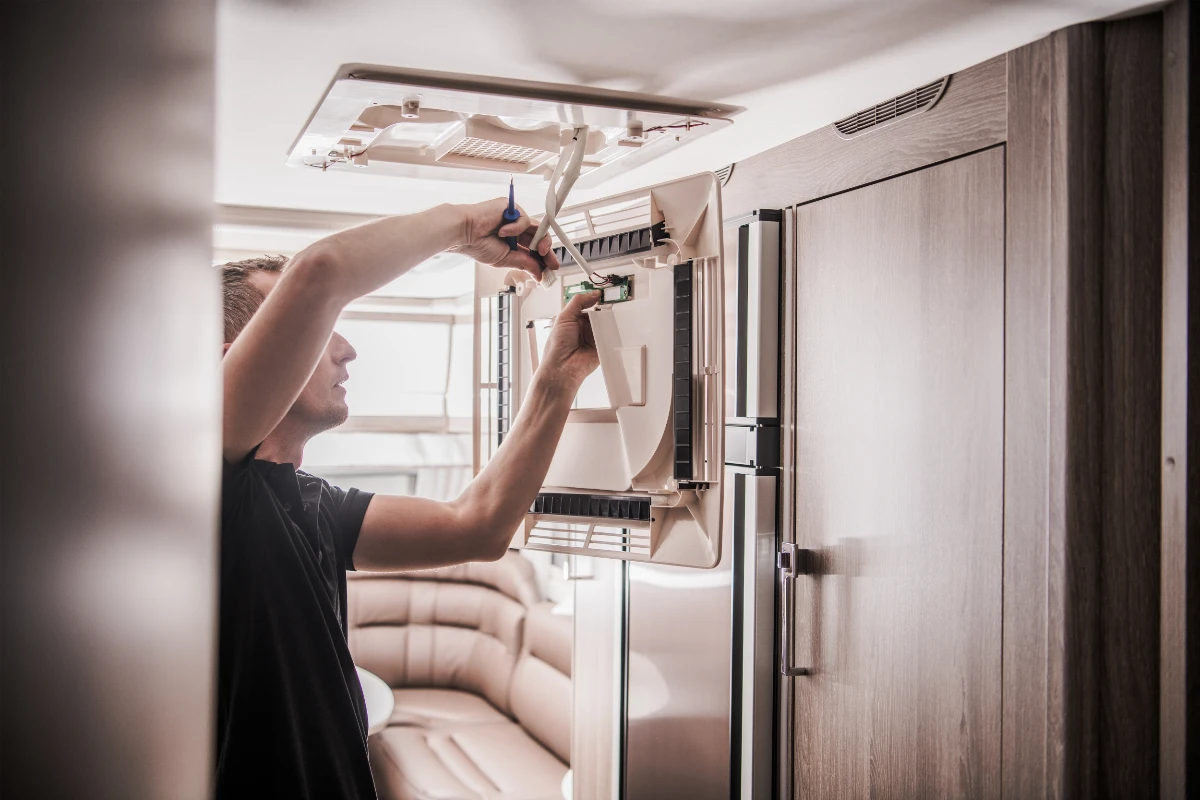
Interior RV Stuff: Keeping It Comfy Inside
Your RV interior is where you live while traveling. Taking care of it makes your trips better and prevents expensive repairs later.
Floors
- Look for soft spots or water damage every few months
- Clean floors based on what they’re made of
- Fix damaged areas right away before they get worse
- Consider waterproof flooring for wet areas like bathrooms
Cabinets and Storage
- Tighten loose hinges and handles regularly
- Add some lubricant to drawer slides so they move smoothly
- Check around storage areas for water getting in
- Look for mold in hidden corners
Walls and Ceiling
- Check for separation at seams or water stains monthly
- Clean walls with the right products (don’t use harsh stuff on wall panels)
- Keep an eye on ceiling vents and skylights for leaks
- Fix any soft spots immediately
Appliances
- Check propane connections for leaks using soapy water
- Clean your fridge coils every 6 months
- Remove scale from your water heater yearly
- Test all appliances before big trips
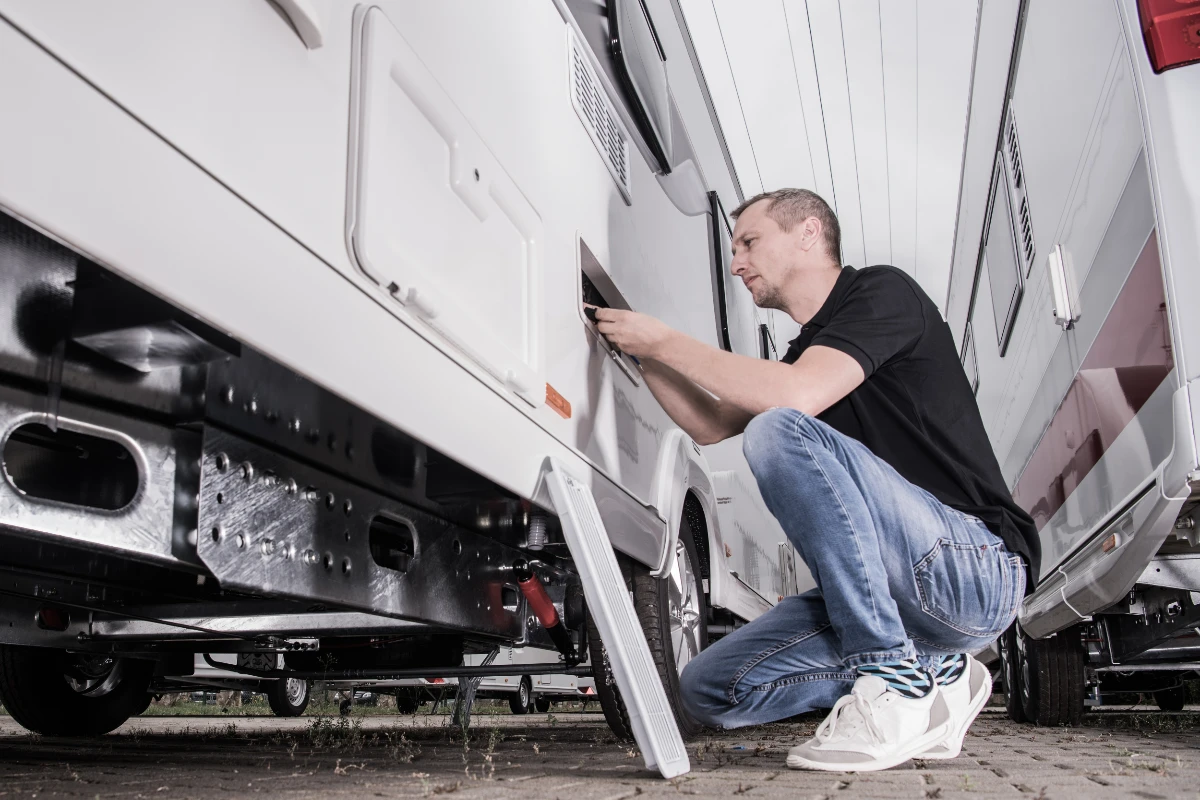
Exterior RV Care: Protecting Against Weather
Your RV faces sun, rain, wind, and road debris constantly. Good maintenance stops premature damage.
Roof and Seams
- Check your roof every 3 months and after storms
- Clean the roof surface following manufacturer instructions
- Apply sealant to cracked or worn seams
- Look carefully around vents, antennas, and AC units for potential leaks
Windows and Doors
- Check rubber seals twice a year for cracks
- Replace damaged weather stripping to keep water out
- Lubricate slide mechanisms with the right products
- Test all locks and latches
HVAC System
- Clean or replace air filters every 1-2 months when using your RV
- Remove debris from outside AC units
- Check ductwork connections
- Get professional HVAC service yearly
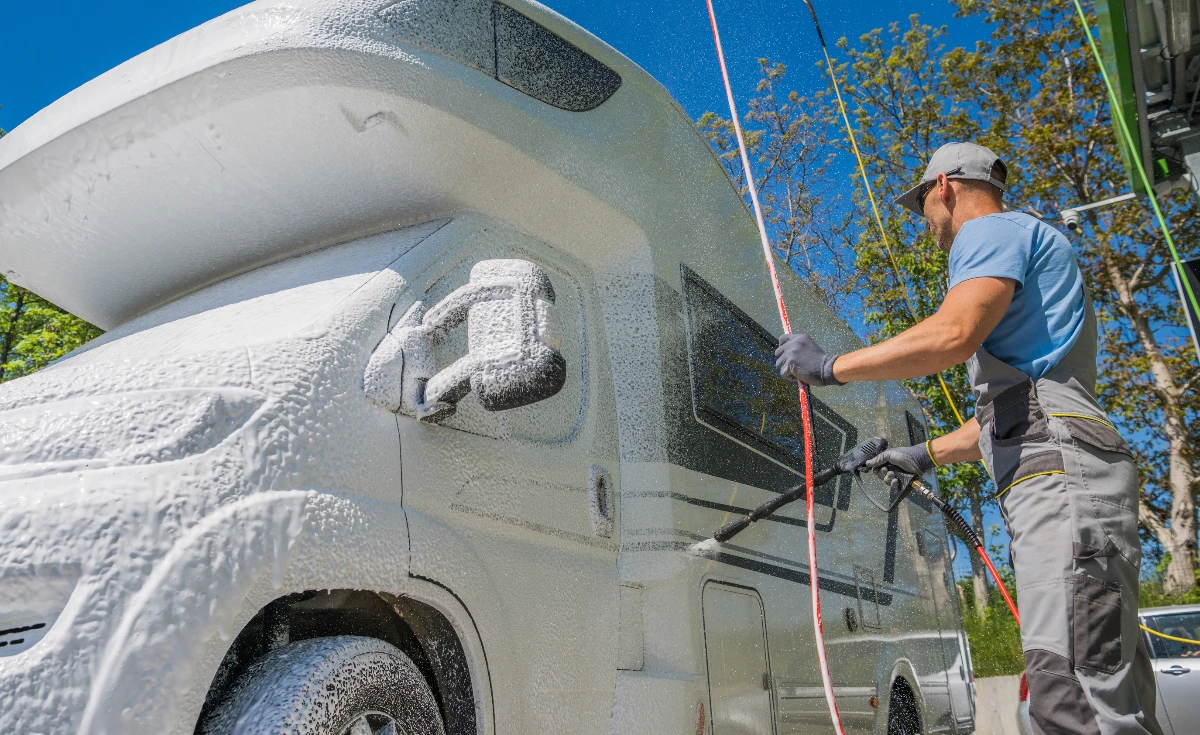
RV Detailing: Making It Look Good and Last Longer
Regular detailing keeps your RV looking great and protects its value.
Outside Cleaning
- Wash with RV-specific cleaners monthly
- Use UV protectant on rubber and plastic parts
- Wax the exterior every 3-4 months to fight sun damage
- Clean awnings with mild soap and let them dry completely
Inside Detailing
- Deep clean upholstery and carpets every few months
- Dust hard-to-reach spots
- Use the right cleaners for different surfaces
- Clean up spills and stains right away
Seasonal RV Maintenance Checklist
Spring Checklist
- De-winterize water systems and look for leaks
- Check tires for cracks and proper pressure
- Test battery and clean the terminals
- Inspect roof and seals after winter
- Test all lights and signals
Summer Checklist
- Make sure AC works before hot weather hits
- Check that awnings and slide-outs work smoothly
- Test if fridge cools properly
- Look for tears in window screens
- Test smoke and CO detectors
Fall Checklist
- Clean gutters and roof before winter comes
- Test heater and furnace
- Look for drafts around windows and doors
- Lubricate locks and hinges
- Check windshield for chips or cracks
Winter Prep
- Winterize water systems properly
- Take steps to prevent mice and other pests
- Disconnect batteries or use a trickle charger
- Cover RV or store it indoors if possible
- Remove food and items that can freeze
Regular Maintenance Schedule
Every Trip
- Check tire pressure and look for damage
- Test all lights and brakes
- Look under the RV for fluid leaks
- Test propane detector and smoke alarms
- Make sure all latches and locks work
Monthly
- Check battery water level (for batteries that need water)
- Look at roof and body seals
- Clean AC filters
- Tighten loose screws
- Clean awning and check how it works
Every 3-4 Months
- Clean water system
- Deep clean holding tanks
- Lubricate moving parts
- Rotate tires if needed
- Look at suspension parts
Yearly
- Service the generator
- Repack wheel bearings
- Service the AC system
- Deep clean exterior and protect it
- Get brakes professionally checked
- Have propane system checked for leaks
Common Questions About RV Maintenance
Most manufacturers say you should get a yearly inspection by a qualified technician. If you have a motorized RV, you should also get service every 10,000-12,000 miles. If you live in your RV full-time, you might need service every 3-6 months.
Check and maintain all roof and body seals regularly. Do this at least every three months and after bad weather. Fix small cracks right away to prevent expensive water damage later.
Regular cleaning and seal maintenance. Keeping your roof clean and seals in good shape prevents costly water damage. Regular fluid checks and filter changes also help your RV systems last much longer.
Clean or replace air filters monthly when you use your RV a lot. Remove leaves and debris from outside units, check that all ducts are connected properly, and get professional service once a year, ideally before summer starts.
For storage less than a month, disconnect the negative terminal. For longer storage, either take the batteries out and store them somewhere with controlled temperature, or install a good trickle charger or solar maintainer. For batteries that need water, check levels monthly.
Taking good care of your RV means it stays comfortable, safe, and reliable. Follow this guide and you’ll have better trips and your RV will last longer. Your RV will be ready for all your adventures for years to come.
Want to learn more about keeping your RV in great shape? Check out our guide to overlanding adventures that can help you prepare for your next trip.