Overlanding is backpacking for car campers. That’s the simplest way to put it—and it nails the essence of this growing outdoor pursuit.
Just like backpackers seek remote trails and carry everything they need, overlanders use vehicles to reach places most travelers never see. But unlike traditional car camping where you park at a groomed site with a picnic table, overlanding is about the journey itself—moving through wilderness rather than just hitting one spot off the main road.

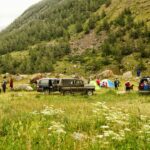
When someone packs their 4×4 with camping gear, recovery equipment, and disappears down Forest Service roads for days or weeks, they’re not just camping—they’re overlanding. The thrill comes from self-reliant travel, waking up somewhere new each morning, and the pure freedom of choosing your path.
Ask ten overlanders why they do it, and you’ll hear variations on a theme: escaping crowds, exploring forgotten back roads, and experiencing landscapes most people only see in magazines. Talk to enough of them, and you’ll realize it’s not about the Instagram posts—it’s about genuine disconnection from the daily grind.
The Real Definition of Overlanding: Beyond the Marketing Hype
Let’s be real—”overlanding” has become quite the buzzword. Some cynics dismiss it as merely “car camping with expensive gear” or “a marketing term for people who’d rather spend $60k on a kitted-out rig than $60 on a tent.” There’s a kernel of truth there, but it misses the larger point.
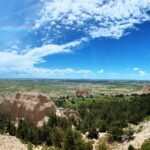
At its core, overlanding means self-reliant, vehicle-based travel where the journey matters more than the destination. It’s about the 380,000+ miles of roads in our national forests and grasslands—eight times more than the interstate highway system—and exploring them at your own pace.
The term has Australian roots, where cattle drovers would move livestock across vast distances—literally driving “over land.” Later, adventurers adopted the term for transcontinental vehicle expeditions. The Oxford-Cambridge expedition of 1955, when university students drove Land Rovers from London to Singapore, cemented overlanding in the adventure travel vocabulary. The Oxford English Dictionary’s earliest evidence for the word overlanding is in 1847 from Port Philip Herald (Melbourne).
For some purists, true overlanding means crossing countries or continents—driving from Europe to India or from Alaska to Patagonia. But most weekend warriors adapt this ethos to shorter adventures: exploring remote public lands, forest service roads, and BLM routes while carrying everything needed to live comfortably for days.

Vehicle & Gear: What You Actually Need vs. What Instagram Suggests
Here’s the beautiful truth that Instagram influencers won’t tell you: the best overlanding vehicle is the one you already own. While social media might suggest you need a $100,000 rig with every accessory imaginable, reality is far more forgiving.
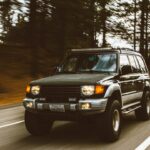
People overland in everything from stock Subarus to Honda Fits, old Toyota pickups to vintage Land Cruisers. The guy with a beat-up ’95 Tacoma and basic camping gear often goes more places than someone paralyzed by protecting their pristine, overbuilt rig.
That said, certain fundamentals make life easier:
- Decent ground clearance and appropriate tires for your terrain
- Basic recovery gear (shovel, traction boards, tow strap)
- Water storage and filtration systems
- Food and cooking equipment
- Navigation tools (both digital and analog)
- First aid and vehicle repair kits
The overlanding world is full of clever solutions, from slide-out kitchen systems to rooftop tents. These aren’t requirements—they’re conveniences. Many experienced overlanders prefer simpler setups that are lighter, more reliable, and leave budget for actual travel rather than gear.
Many veterans joke that what makes a rig look “overlandy” is the amount of crap mounted on the roof—increasing the center of gravity and actually reducing off-road capability. That pristine hi-lift jack mounted next to a rooftop tent? It’s often more fashion than function.

Planning vs. Improvisation: Finding the Sweet Spot in Overlanding
Most overlanders fall somewhere between meticulous planners and free spirits. They research potential routes and destinations but intentionally leave room for detours and discoveries.
Planning often involves identifying key waypoints and potential campsites while maintaining flexibility for exploration. Many use GPS apps like Gaia or onX Offroad alongside paper maps—technology fails, but paper doesn’t need batteries.
The essence of good overlanding planning is having options. Experienced travelers mark multiple potential campsites and alternative routes. When a road is washed out or a primo campsite is occupied, having Plan B (and C and D) prevents a great day from turning miserable.
How much you plan depends partly on your risk tolerance and experience level. Beginners should stay closer to civilization and map everything carefully. Veterans might venture deeper with more contingencies built into their thinking.
Trip planning fundamentals:
- Research road conditions and seasonal closures
- Identify multiple potential campsites
- Download offline maps and save GPS coordinates
- Calculate fuel and water requirements with a healthy margin
- Share your itinerary with someone who isn’t traveling
- Expect plans to change—that’s part of the adventure
The happiest overlanders embrace detours and unexpected challenges as features, not bugs. The best stories rarely come from trips that went exactly as planned.

The Spectrum: Where Overlanding Fits in Outdoor Recreation
Overlanding sits at an interesting crossroads in outdoor recreation. It shares DNA with several related pursuits but maintains its own identity.
In the overlanding community, a common saying reflects this relationship perfectly: “Off-roaders are to overlanders as mountain climbers are to thru-hikers.” Off-roading focuses on technical challenges and vehicle capability, while overlanding uses vehicles as means to experience remote places over multiple days. The overlander might enjoy an occasional tough trail but mainly sticks to routes that support forward progress.
Here’s how overlanding relates to similar activities:
- Car camping: Typically at established campgrounds with amenities; overlanding ventures to dispersed sites far from facilities
- Vanlife: Often focused on full-time or long-term living, sometimes in urban areas; overlanding is more about remote exploration
- RVing: Usually sticks to developed campgrounds with hookups; overlanding emphasizes self-sufficiency
- Off-roading: Centered on technical driving challenges; overlanding uses vehicles primarily for transportation to remote areas
The beauty is the overlap between these communities. Many vanlifers incorporate overlanding on their journeys. Weekend overlanders might occasionally enjoy established campgrounds for a shower. The boundaries are fluid, and most people care more about getting outside than strict definitions.
The Mindset: Self-Reliance and Problem-Solving
More than gear or vehicles, successful overlanding depends on mindset—specifically, self-reliance and resourcefulness.
When you’re 50 miles from pavement and something breaks, outside help isn’t an option. Overlanders must solve problems with the tools and materials they carry. This extends beyond mechanical breakdowns to weather changes, terrain challenges, and emergency situations.
This self-reliance isn’t about machismo—it’s practical necessity. Remote areas have no cell service, no AAA, and sometimes no passing traffic for days. The most valuable skills include:
- Basic vehicle maintenance and troubleshooting
- Navigation without electronics
- First aid and emergency medical assessment
- Weather prediction and adaptation
- Improvised repairs and solutions
For many, this problem-solving aspect becomes addictive. There’s profound satisfaction in overcoming challenges with limited resources. Every trip builds competence and confidence that extends beyond overlanding into everyday life.
Experienced overlanders often view their vehicles simply as tools—not Instagram props but functional equipment for accessing experiences. The most accomplished travelers focus less on fancy modifications and more on understanding their vehicle’s capabilities and limitations.
Frequently Asked Questions About Overlanding
Absolutely not. While dedicated “overland rigs” get attention online, you can start with almost any vehicle. People have meaningful overlanding experiences with everything from Honda Fits to family SUVs. What might be boring terrain for someone with a lifted 4×4 can be an exciting challenge in a standard vehicle. Start with what you have, modify only when necessary, and focus on building skills rather than building the perfect vehicle.
Car camping typically means driving to a specific destination (often a developed campground) and staying put. Overlanding emphasizes the journey—you might camp in a different spot each night while exploring remote areas. The essential question is: “Do you travel to camp, or do you camp to travel?” Overlanders camp in order to travel.
For beginners, more planning equals more safety. Start with shorter trips close to home on established back roads. Research thoroughly, have multiple backup plans, and share your itinerary with someone reliable. The skills you develop on “easy” trips prepare you for more remote adventures later. Many experienced overlanders have backup plans on top of backup plans.
It can be—but it doesn’t have to be. While social media showcases $100,000+ rigs with every accessory imaginable, many people overland with basic vehicles and camping gear they already own. Focus on skills and experiences rather than accumulating gear. The most accomplished overlanders often have surprisingly simple setups optimized through experience rather than spending.